
Introduction
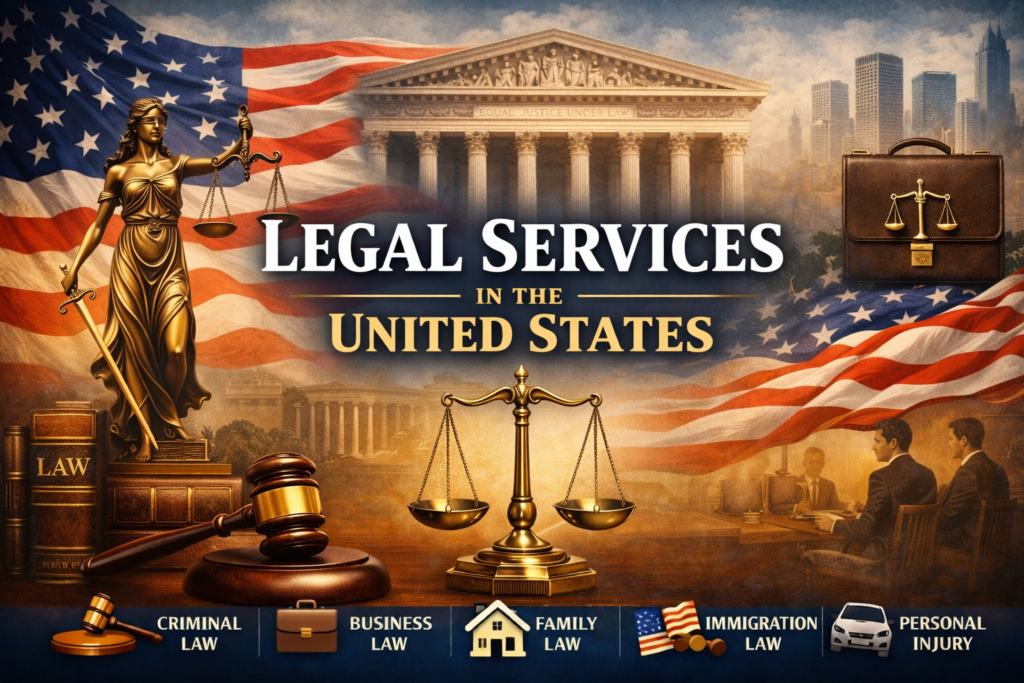
Legal services play a crucial role in maintaining justice, protecting rights, and ensuring that laws are properly applied across society. In the United States, legal services are provided by a wide range of professionals including attorneys, law firms, public defenders, legal aid organizations, and corporate legal departments. These services help individuals, businesses, and government entities navigate the complex legal system.
The American legal system is based on a combination of federal laws, state laws, and local regulations. Because of this complexity, legal professionals are essential in interpreting statutes, representing clients in court, drafting legal documents, and providing legal advice.
Legal services cover numerous areas such as criminal defense, civil litigation, family law, immigration law, corporate law, intellectual property, personal injury, real estate, and more. From individuals seeking justice after an accident to corporations managing large financial transactions, legal professionals provide support in nearly every aspect of modern life.
This article explores the structure of legal services in the United States, the types of services available, the professionals who provide them, how legal services are regulated, and how individuals can access legal assistance.
Table of Contents
Top 10 Legal Service Providers in the USA
| Rank | Law Firm | Main Services | Website |
|---|---|---|---|
| 1 | Kirkland & Ellis | Corporate law, litigation, private equity, intellectual property | https://www.kirkland.com |
| 2 | Latham & Watkins | Banking law, M&A, tax, environmental law | https://www.lw.com |
| 3 | DLA Piper | Global legal services, corporate law, finance | https://www.dlapiper.com |
| 4 | Baker McKenzie | International business law, tax, trade law | https://www.bakermckenzie.com |
| 5 | Norton Rose Fulbright | Energy law, financial institutions, infrastructure | https://www.nortonrosefulbright.com |
| 6 | Hogan Lovells | Corporate law, regulatory law, IP law | https://www.hoganlovells.com |
| 7 | White & Case | International arbitration, banking, capital markets | https://www.whitecase.com |
| 8 | Cravath, Swaine & Moore | Corporate law, mergers & acquisitions, litigation | https://www.cravath.com |
| 9 | Skadden, Arps, Slate, Meagher & Flom | Corporate law, restructuring, litigation | https://www.skadden.com |
| 10 | Holland & Knight | Public policy, real estate, litigation | https://www.hklaw.com |
The Structure of the U.S. Legal System
Understanding legal services requires a basic understanding of how the U.S. legal system operates.
The United States follows a common law system, which means court decisions and judicial precedents play a significant role in shaping the law.
The legal system consists of several layers:
Federal Courts
Federal courts handle cases involving federal laws, constitutional issues, disputes between states, and cases involving different states or countries.
Major federal courts include:
- District Courts (trial courts)
- Circuit Courts of Appeals
- The Supreme Court of the United States
The Supreme Court is the highest judicial authority in the country.
State Courts
Each state operates its own court system. State courts typically handle:
- Criminal cases
- Family disputes
- Contract disputes
- Property matters
- Personal injury claims
Most legal services in the U.S. are related to state law matters.
Administrative Courts
Administrative agencies also provide legal proceedings for regulatory matters such as:
- Immigration
- Social Security
- Tax disputes
- Environmental regulations
Legal professionals often represent clients before administrative tribunals as well.
Types of Legal Services
Legal services in the United States are divided into many specialized practice areas. Lawyers typically focus on a specific type of law.
Criminal Law Services
Criminal law involves cases where individuals are accused of committing crimes. Legal services in this field include:
- Defense representation
- Bail hearings
- Plea negotiations
- Trial representation
- Appeals
Criminal defense attorneys protect the rights of accused individuals and ensure due process is followed.
Defendants who cannot afford an attorney are provided one by the government through public defender offices.
Civil Litigation
Civil litigation refers to legal disputes between individuals, businesses, or organizations that involve compensation or specific performance rather than criminal punishment.
Examples include:
- Contract disputes
- Property disputes
- Business conflicts
- Personal injury claims
Civil litigation lawyers handle the process of filing lawsuits, gathering evidence, negotiating settlements, and representing clients in court.
Family Law
Family law focuses on legal issues related to family relationships.
Common family law services include:
- Divorce proceedings
- Child custody disputes
- Child support arrangements
- Adoption
- Domestic violence protection orders
- Prenuptial agreements
Family law attorneys also assist in mediation and settlement negotiations to avoid lengthy court battles.
Immigration Law
Immigration law governs the entry, residency, and citizenship of foreign nationals in the United States.
Legal services in this area include:
- Visa applications
- Green card petitions
- Asylum requests
- Deportation defense
- Citizenship applications
Immigration lawyers help individuals navigate complex federal immigration regulations.
Corporate and Business Law
Businesses rely heavily on legal services for compliance, contracts, and transactions.
Corporate legal services include:
- Business formation
- Contract drafting
- Mergers and acquisitions
- Regulatory compliance
- Employment law
- Intellectual property protection
Large companies often maintain internal legal departments in addition to hiring external law firms.
Intellectual Property Law
Intellectual property (IP) law protects creations of the mind such as inventions, designs, and artistic works.
IP legal services include:
- Patent applications
- Trademark registration
- Copyright protection
- Trade secret litigation
- Licensing agreements
Technology companies, startups, and creative professionals frequently require IP legal assistance.
Real Estate Law
Real estate lawyers assist clients with property transactions and disputes.
Their services may include:
- Property purchase agreements
- Title searches
- Mortgage documentation
- Lease agreements
- Landlord-tenant disputes
- Zoning and land use regulations
Real estate transactions often require legal review to prevent costly future disputes.
Personal Injury Law
Personal injury attorneys represent clients who have been harmed due to negligence or misconduct.
Common personal injury cases include:
- Car accidents
- Workplace injuries
- Medical malpractice
- Product liability
- Slip and fall accidents
These lawyers typically work on a contingency fee basis, meaning they are paid only if the client wins compensation.
Providers of Legal Services
Legal services in the United States are delivered by a variety of professionals and organizations.
Private Law Firms
Private law firms are the most common providers of legal services. They range from small solo practices to massive multinational firms.
Types of law firms include:
- Solo practitioners
- Small firms
- Boutique firms
- Large corporate firms
Large firms often specialize in corporate and financial matters.
Public Defenders
Public defenders are government attorneys who represent individuals charged with crimes but unable to afford private counsel.
The right to a public defender was established by the Supreme Court decision in Gideon v. Wainwright (1963).
Public defenders handle thousands of cases each year and are essential to protecting constitutional rights.
Legal Aid Organizations
Legal aid organizations provide free or low-cost legal services to low-income individuals.
These services focus on issues such as:
- Housing disputes
- Consumer protection
- Family law
- Benefits claims
Legal aid programs are funded through government grants, donations, and nonprofit organizations.
In-House Counsel
Large corporations employ in-house attorneys who manage the company’s legal matters internally.
Their responsibilities include:
- Contract negotiation
- Compliance monitoring
- Litigation management
- Regulatory affairs
In-house lawyers help businesses reduce legal risks and manage costs.
Licensing and Regulation of Lawyers
To provide legal services in the United States, attorneys must meet strict licensing requirements.
These generally include:
- Earning a bachelor’s degree
- Completing a Juris Doctor (JD) degree from an accredited law school
- Passing the state bar examination
- Passing character and fitness evaluations
Lawyers must also comply with professional ethical standards set by state bar associations.
Violations may lead to disciplinary actions including suspension or disbarment.
Cost of Legal Services
Legal services in the United States can be expensive depending on the complexity of the case and the experience of the attorney.
Common billing structures include:
Hourly Billing
Many lawyers charge hourly rates that may range from $150 to over $1000 per hour depending on specialization and location.
Flat Fees
Certain services such as drafting wills or business formation may involve fixed fees.
Contingency Fees
Personal injury lawyers often charge a percentage (typically 30-40%) of the compensation recovered.
Retainers
Clients may pay an upfront retainer that lawyers draw from as work is performed.
Technology and Modern Legal Services
Technology has significantly transformed legal services in recent years.
Innovations include:
- Online legal consultations
- Document automation
- Artificial intelligence for legal research
- Virtual court hearings
- Electronic filing systems
Legal technology companies are making legal assistance more accessible and efficient.
Online platforms now allow individuals to generate legal documents, find lawyers, and receive legal advice remotely.
Access to Justice Challenges
Despite the availability of legal services, many Americans struggle to access legal help due to high costs.
Studies show that a large percentage of civil legal needs among low-income populations remain unmet.
Key challenges include:
- High legal fees
- Limited legal aid funding
- Complex legal procedures
- Geographic barriers
Efforts are ongoing to improve access through pro bono programs, technology solutions, and policy reforms.
The Role of Pro Bono Legal Services
Pro bono legal services are provided voluntarily and without charge to individuals who cannot afford legal representation.
Many law firms encourage attorneys to contribute a portion of their time to pro bono work.
Pro bono programs support causes such as:
- Civil rights advocacy
- Immigration assistance
- Housing rights
- Domestic violence protection
These services help bridge the gap in access to justice.
The Future of Legal Services in the United States
The legal services industry is evolving rapidly due to globalization, technological advancements, and changing client expectations.
Major trends shaping the future include:
Legal Technology
Automation and AI are improving efficiency in legal research and document drafting.
Alternative Legal Service Providers
Non-traditional companies are offering cost-effective legal solutions.
Remote Legal Services
Virtual consultations and remote court hearings are becoming more common.
Increased Focus on Client Experience
Clients now expect transparency, affordability, and faster service delivery.
These developments are transforming how legal services are delivered and consumed.https://appgaze.com/blog/top-5-best-free-vpns-for-android-in-2025-safe-fast-legal/
Conclusion
Legal services are an essential component of the United States justice system. They ensure that laws are interpreted correctly, rights are protected, and disputes are resolved fairly.
From criminal defense to corporate law, legal professionals provide specialized expertise across a wide range of issues affecting individuals and businesses. While challenges remain in terms of affordability and accessibility, ongoing reforms and technological innovations are helping to make legal services more accessible.
As society continues to evolve, the legal profession will remain a cornerstone of democratic governance and the rule of law. Ensuring that legal services are available, ethical, and effective will continue to be a vital priority for policymakers, legal professionals, and communities across the United States.
How much does it cost to hire a lawyer in the United States?
The cost of hiring a lawyer in the United States varies depending on the type of legal service required. On average, attorneys charge between $150 and $1000 per hour depending on their experience and specialization. Some lawyers, especially personal injury attorneys, work on a contingency fee basis, meaning they only get paid if the client wins the case.
What types of legal services are most commonly used in the USA?
The most common legal services in the United States include personal injury law, family law, criminal defense, immigration law, corporate law, and real estate law. Individuals often seek legal help for matters such as divorce, accidents, business disputes, and visa applications.
How do I find the best lawyer for my legal case?
To find the best lawyer, individuals should research experienced attorneys, read client reviews, check state bar association records, and schedule a legal consultation. Many law firms offer free initial consultations, allowing clients to discuss their case before hiring an attorney.
Do personal injury lawyers charge fees upfront?
Most personal injury lawyers in the United States operate on a contingency fee arrangement, meaning clients do not pay upfront legal fees. Instead, the lawyer receives a percentage of the compensation if the case is successful. This arrangement makes legal representation accessible to accident victims.
Can I get free legal services in the United States?
Yes, free or low-cost legal services are available through legal aid organizations, nonprofit legal clinics, and pro bono programs offered by law firms. These services are typically provided to individuals who cannot afford private attorneys.